

Severance of Joint Tenancy

Severance of Joint Tenancy
By owning your property as ‘Tenants in Common’, rather than joint owners, you can state where you would like your half of the property to go on death. There is a lot more protection owning your property as Tenants in Common, including protecting a half share of the property against care fee costs. When you become Tenants in Common we would include a ‘Life Interest Trust’ in your Wills, giving each other the right to live in the property for as long as you like.
Ownership as Tenants in Common also enables you to ensure that your children are not disinherited after your death. For example, if your spouse remarries in the future, your children will not lose out on at least a share of your property.
How is your property held?
Joint Tenancy
If you hold your property as joint tenants with another person, this means that both owners own 100% of the property, not a divided share. You have equal rights to the whole property, and if the property is sold you will each be entitled to an equal share of the proceeds.
A joint tenancy creates rights of survivorship. The result is that when one owner dies the remaining owners will automatically own the whole property. This means that a joint tenant cannot gift their interest in the property to anyone by their Will.
Tenants in Common
If you hold your property as tenants in common, you will each have a divided share in the property. This is often an equal share, but it is also possible to hold the property in unequal shares. This is an attractive option for people purchasing a property together and contributing different amounts towards the deposit.
Under a tenancy in common, each owner can deal with their share in the property separately, allowing them to gift their share to their own beneficiaries by their Will. This also opens up more opportunities for planning to protect their share of the property by using trusts in their Will.
How can I check how my property is held?
Your estate planner will be able to download the title register from the land registry website and confirm how your property is owned.
Can a title be severed from joint tenants to tenants in common?
Yes, it can be. We can help arrange this by submitting the correct forms to the Land Registry.
Does the severance have to be mutually agreed between the home owners?
No. There may be a situation where a home is owned jointly by husband and wife. However, they are no longer on talking terms and wife wishes to sever the tenancy for example. This can be done and is otherwise known as a unilateral severance. If you would like more information on this, please speak to a member of the team.
How long is the turnaround time for processing applications?
The notice of severance will be drafted by your will writer so it depends on their turnaround time to get this drafted for you and then for it to get signed. Remember, once it is signed, it shows your intention to hold the property as tenants in common. The SEV form is only for the land registry to update their records so it is reflected on the title register.
Currently the Land Registry are taking around one year for the Severance of Tenancy to be completed and to show on the title.
Example
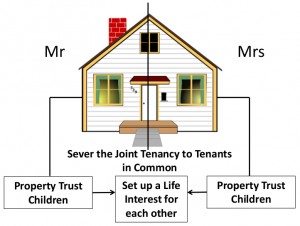
The below example shows how a Severance of Tenancy would work. When Mr dies his share would go in to Trust to protect at least a half share for the children, there would be a Life Interest in the property for Mrs to live there as long as she wishes, or until she dies. Providing both Mr and Mrs leave the house to their children, the children will receive the property on second death.


“Excellent service from beginning to end – and beyond. Nothing is too much trouble for them. I would, and do, highly recommend Inheritance Legal Services. A totally trustworthy team.”
Mr & Mrs Whitby
Contact us today about becoming Tenants in Common
If you have any questions, or would like to arrange an appointment, please do not hesitate to contact us.